
“I Love These Books!”
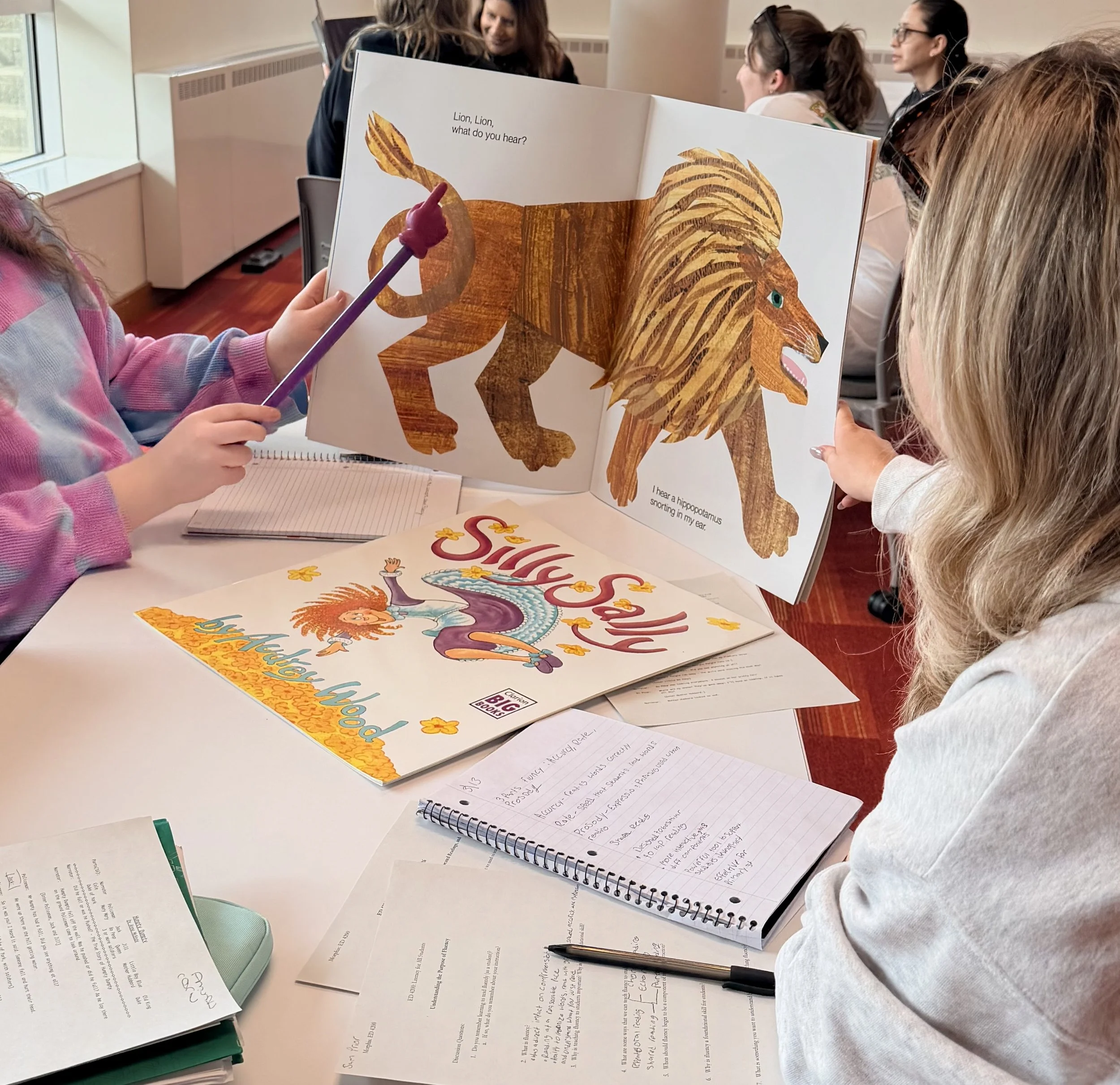
Big Books in action!
“But, I don’t see them in classrooms anymore. Why are screens replacing all of the fun parts of learning?”
I recently brought Big Books into my class to teach the students how to address fluency through targeted instruction. Fluency is the bridge between decoding the words on the page and understanding what they mean. Fluency is when kids read the words accurately, when they read at a reasonable pace (similar to how they speak rather than speed read), and when they read with expression.
So, how do Big Books help with fluency? These are great to get model fluent reading with kids and allow them to read with you and after you. Big Books can be seen by the whole class (rather than a read-aloud with a regular-sized book where not all kids can see the words). They are great for shared reading lessons when kids read the words at the same time as the teacher or when the kids read the words after the teacher has read the words. The kids are taught to match how the teacher is reading the words - so they have a clear model for the pace of the reading, the expression that the teacher is using when reading, and how the teacher makes sure to read the words accurately.
I have used Big Books with students for a long time, but this semester, I had the strongest and most positive reaction. Very few students even knew that Big Books were a tool that could be used in the classroom. They had never seen one in the classrooms they were in as kids. One student shared that she, “felt more comfortable” when reading as a class because she could participate in the reading.
In my opinion, shared reading is such an underutilized teaching practice. Often popcorn or round robin reading is used in the classroom (which kids really hate and does not have any benefit) and kids do not feel comfortable with popcorn reading lessons.
I’ve been thinking about the current literacy crisis and the decline in kids’ reading for pleasure. If kids are only reading on screens and if they are receiving instruction through outdated practices such as popcorn reading — how will we get kids to want to read? I think looking at the different types of books available is worth the time and effort to help kids see the joy and pleasure in reading.